The history of chainsaws (between the years 1969 - 2018)

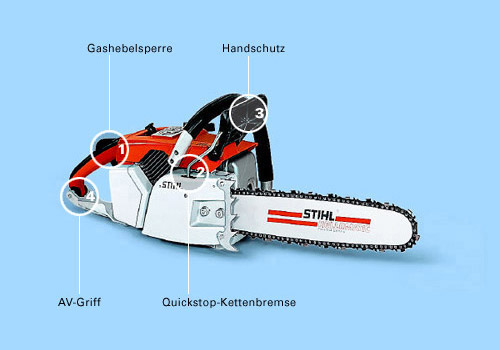
In 1971 The safety throttle valve is fitted as a standard accessory on all Stihl chainsaws to prevent
 accidental starting of the chainsaw.
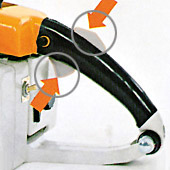
In 1972 на верижния трион Stihl appears a new safety device.
The chain brake, which is located in front of the handle and stops the chain
of the motor saw for a fraction of a second upon impact.
 In 1973 another innovation for safety and comfort is attached to Stihl chainsaws.
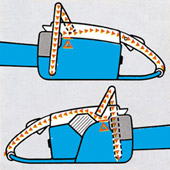
With a warmer handle, the cutter operator can keep his tool stable even in extreme cold.
In 1973 another innovation for safety and comfort is attached to Stihl chainsaws.
With a warmer handle, the cutter operator can keep his tool stable even in extreme cold.
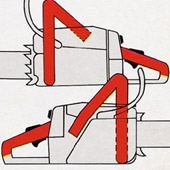
This becomes possible through the recirculation of hot combustion gases through the handle.
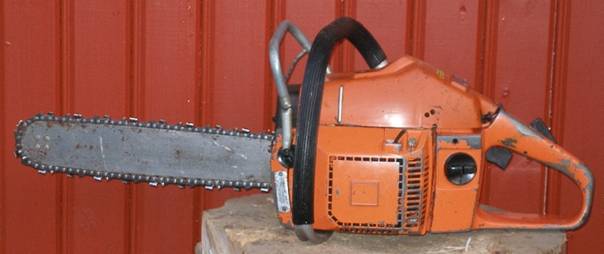
 Meanwhile, as a result of intensive research and development work at Husqvarna, the 140 model is born,
which is based on the Husqvarna 180 model, as it is smaller and lighter than it.
This is the first Husqvarna chainsaw equipped with a chain brake.
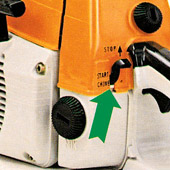
 In 1976 Stihl chainsaws are manufactured with a switch that allows you to start the chainsaw quickly
and safely, without letting go of the handle.
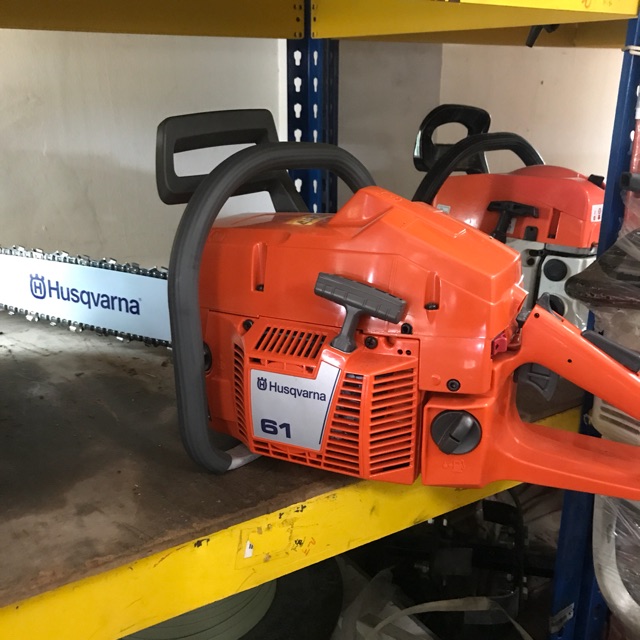
 Also in 1976 Husqvarna is trying to enter the temporary consumer segment and presents the Husqvarna 61 model,
a simplified version of the Husqvarna 162 professional chainsaw.
Although the Husqvarna 61 was a very good cutter, it did not reach the success of its predecessor.
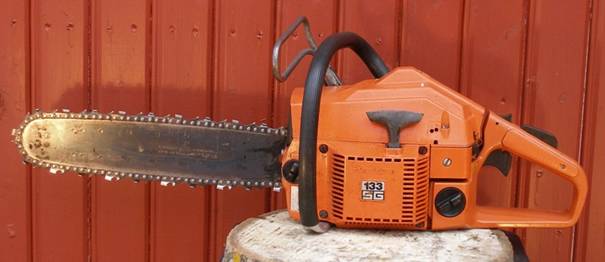
 In 1981 debuts the Husqvarna 133 model, which is becoming very popular in Japan and other Asian countries.
 In 1982 another successful Husqvarna model appears, the Husqvarna 50 Rancher, which is becoming very popular around the world,
but especially among North American farmers and mountain owners who need a simple, strong and reliable chainsaw.
 In 1983 Husqvarna presents its newest professional chainsaw (at the time), the Husqvarna 154. The Husqvarna 154
is without a doubt a hit.
Orders are also increasing in countries such as Canada, Russia, Czechoslovakia and the United Kingdom.
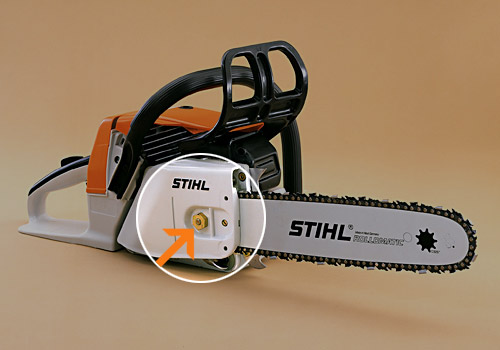
 Since 1984 Stihl uses a side adjustment of the tension on the chain saw.
The chain tension of the saw is adjusted through the clutch cover by the chain tensioner.
Since 1984 Stihl uses a side adjustment of the tension on the chain saw.
The chain tension of the saw is adjusted through the clutch cover by the chain tensioner.
In this way, any contact with the saw chain can be avoided.
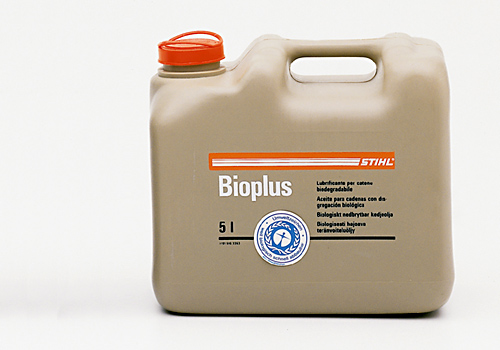
 In 1985 STIHL begins to offer on the market plant-based chain oil for environmentally friendly consumers,
oil that biodegrades in the soil in a short time.
The trade name of this chain oil is "Blue Angel".
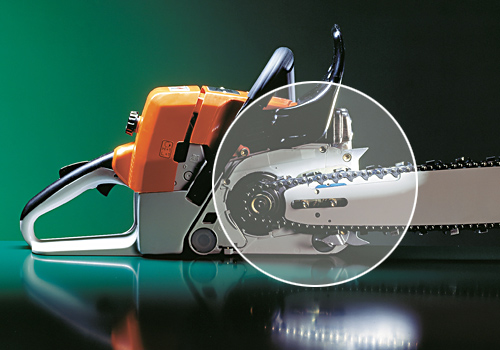
 The Ematic system is used for STIHL chainsaws from 1987.
The Ematic system reduces the use of chain oil, thereby reducing operating costs and the impact on the environment.
The Ematic system is used for STIHL chainsaws from 1987.
The Ematic system reduces the use of chain oil, thereby reducing operating costs and the impact on the environment.
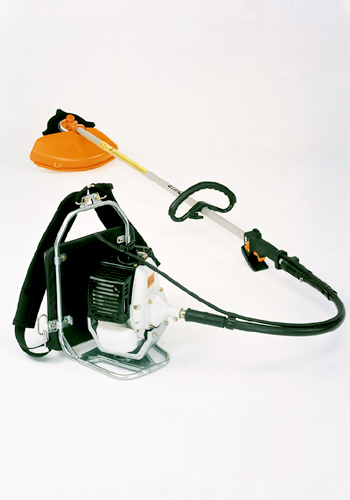
 In 1988 STIHL recommends the FR 106 mower, which is not a motor mower, but a motor mower whose engine can be worn as a backpack.
It turns out that this is the future innovation for mowing.
 In the same year (1988), STIHL developed the world's first catalyst for two-stroke engines.
This can reduce the content of hydrocarbons in exhaust gases by 70-80%.
In the same year (1988), STIHL developed the world's first catalyst for two-stroke engines.
This can reduce the content of hydrocarbons in exhaust gases by 70-80%.
The name of the first chainsaw with catalyst is STIHL 044.
 Also in this year (1988), Husqvarna introduces the 262 XP model through the Air Injection chain saw.
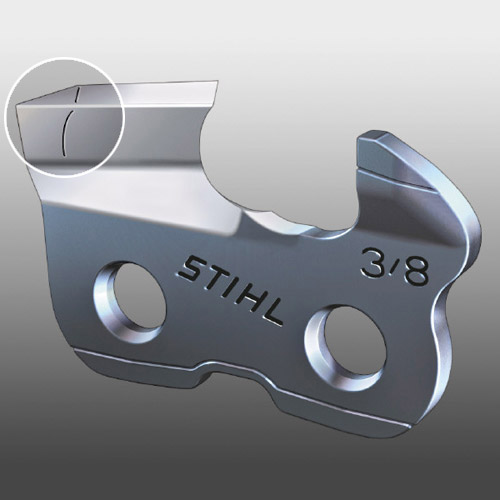
 In 1990 STIHL stamps the teeth of the chainsaw with a wear marker, which helps in early detection of chain wear.
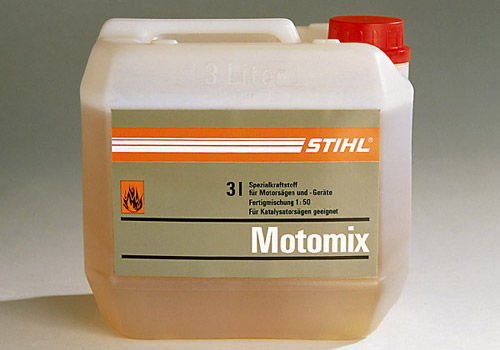
 In the same year (1990), STIHL released a ready-made two-stroke fuel mixture that contained fewer substances harmful to health,
such as lead, sulfur, aromatic hydrocarbons - especially benzene, which is considered particularly carcinogenic.
The high octane number (95) ensures optimal engine performance and low fuel consumption.
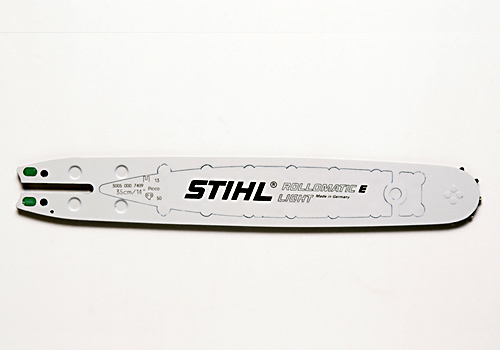
 In 1994 STIHL Rollomatic Blades appear.
The lighter, consisting of two steel plates with a large surface, the hollow spaces are filled with polyamide,
In 1994 STIHL Rollomatic Blades appear.
The lighter, consisting of two steel plates with a large surface, the hollow spaces are filled with polyamide,
reinforced with glass fibers. The result is 38% less weight.
 In 1995 STIHL won the award for the world's quietest gasoline chainsaw.
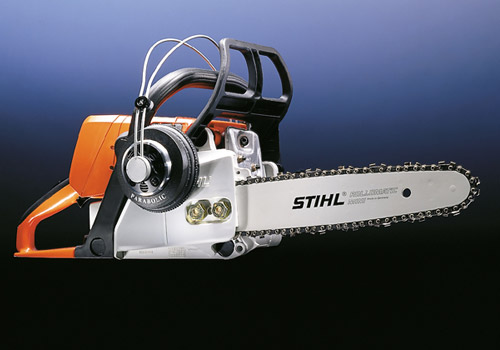 The saw chain must be constantly tightened during work, this can be done with the adjustment wheel without tools.
This additional comfort appeared for the first time with the Stihl 023 C chainsaw,
The saw chain must be constantly tightened during work, this can be done with the adjustment wheel without tools.
This additional comfort appeared for the first time with the Stihl 023 C chainsaw,
and later it was also available with the Stihl 026 C model, both intended for professional use.
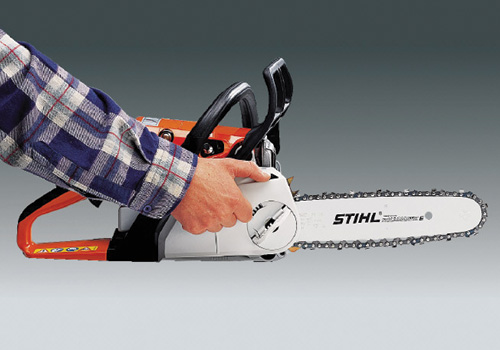 1997 This was the year Husqvarna introduced its first specially developed tree trimming machine,
the 335 XPT, which became a favorite among tree trimming professionals due to its light weight and ease of use.
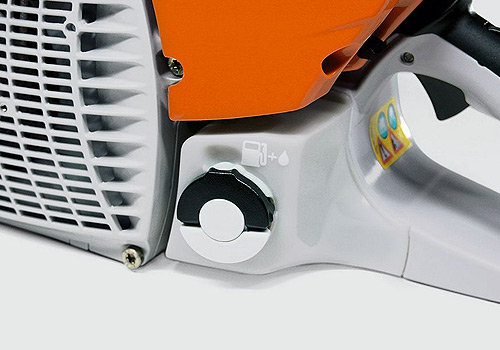
 In 1998 fuel caps appeared on STIHL chainsaws, which can be opened / closed without tools.
Thus, fuel and chain oil tanks can be filled without a special key, after the Stihl 029 and 039 models appeared.
In 1998 fuel caps appeared on STIHL chainsaws, which can be opened / closed without tools.
Thus, fuel and chain oil tanks can be filled without a special key, after the Stihl 029 and 039 models appeared.
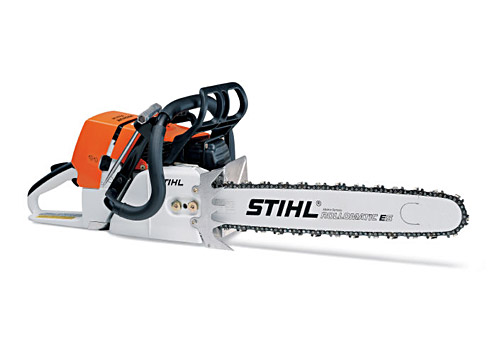
 In 2000 appears the rescue chainsaw STIHL MS 460, which is designed to meet the needs of emergency services
(firefighters, technical rescue and disaster management).
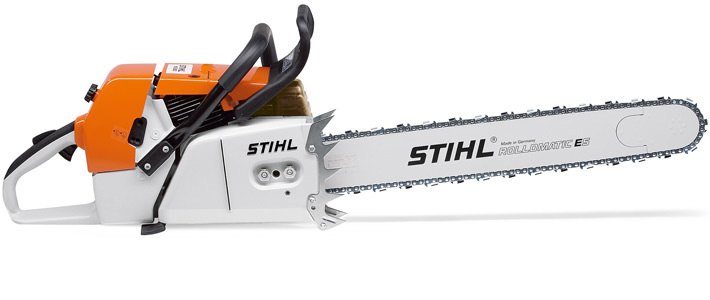
 In 2004 STIHL launches its new leading model MS 880 on the market. The 6.4 kW chain saw
(power/weight ratio 1.6 kg/kW) is designed to meet the highest demands.
 In 2007 the eco-friendly 2-MIX engine appears, which increases performance while reducing consumption and emissions.
The filter change period is also longer thanks to the long-life air filtration system.
In 2007 the eco-friendly 2-MIX engine appears, which increases performance while reducing consumption and emissions.
The filter change period is also longer thanks to the long-life air filtration system.
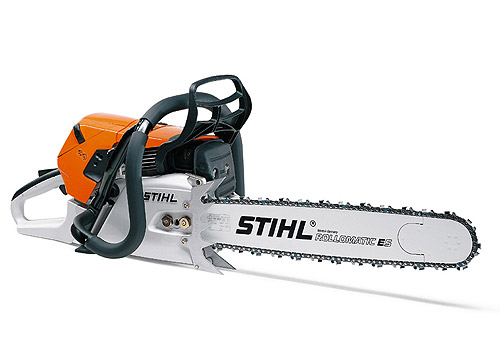 In 2010 Husqvarna will produce X-Torq versions on two of its 3-series machines, the 365 and 372 XP,
which is Husqvarna's bleed technology.
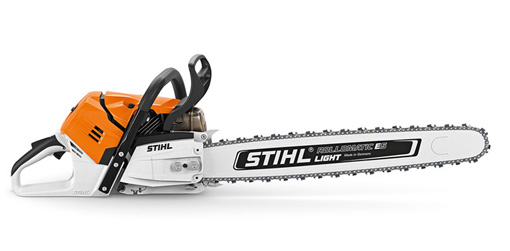
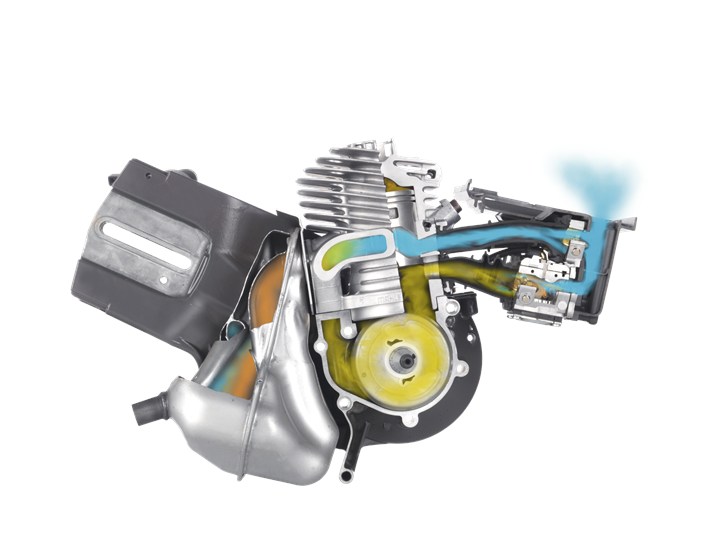 The world's first chainsaw with injector will be released in 2018!
The chain saw with electronically controlled injection has a cylinder volume of 79.2 cm3 and a power of 5 kW, and its
The world's first chainsaw with injector will be released in 2018!
The chain saw with electronically controlled injection has a cylinder volume of 79.2 cm3 and a power of 5 kW, and its
weight is 6.2 kg.
The chain accelerates from 0 to 100 km/h in just 0.25 seconds, thanks to more than 200 injections per second.
The Stihl MS 500i is more efficient than all previous chainsaws and, thanks to its low emissions,
is also more environmentally friendly than any other chainsaw produced to date.
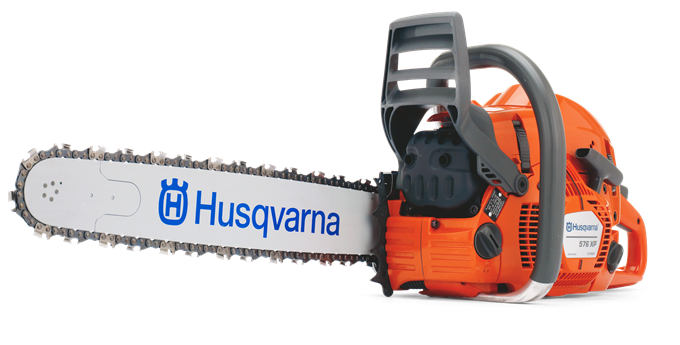
 28. Husqvarna's most modern chainsaw today is the Husqvarna 576 XP, which has all its cutting-edge technologies,
from Air Injection® to X-Torq® to Auto Tune®.





Reviews